
If you’ve ever searched for gluten free egg noodles and felt confused, you’re not alone. Many people assume egg noodles are naturally gluten free, but traditional egg noodles are made with wheat flour, which means they do contain gluten.
Jump to RecipeIn this complete guide, you’ll learn:
- Are egg noodles gluten free?
- How to make homemade gluten free egg noodles
- The best flour for gluten free pasta dough
- How to cook gluten free egg noodles properly
- Can you freeze gluten free egg noodles?
- Best store bought gluten free egg noodles
Whether you’re cooking for celiac safety or simply avoiding wheat, this guide keeps things simple and practical.
Are Egg Noodles Gluten Free?
Traditional egg noodles are made from:
- Wheat flour
- Eggs
- Water
Since wheat flour contains gluten, regular egg noodles are not gluten free.
However, gluten free egg noodles use alternatives like:
- Rice flour
- Tapioca starch
- Potato starch
- Xanthan gum or psyllium husk (as binding agents)
If you have celiac disease, always check labels for certified gluten free to avoid cross contamination.
Types of Gluten Free Egg Noodles
Not all gluten free noodles are the same. You’ll typically find:
1. Homemade Gluten Free Egg Noodles
Fresh, soft texture. Best for soups and stroganoff.
2. Dried Store Bought Gluten Free Egg Noodles
Convenient and shelf-stable.
3. Refrigerated Gluten Free Noodles
Softer texture, quicker cooking time.
4. Egg-Free Gluten Free Alternatives
Some brands skip eggs entirely, using starch blends instead.
Ingredients Breakdown (Why Each Ingredient Matters)
When making a gluten free noodle dough, every ingredient plays a structural role.
Rice Flour
Provides base structure and mild flavor.
Tapioca Starch
Adds stretch and elasticity.
Potato Starch
Improves softness.
Eggs
Create richness and help bind the dough.
Xanthan Gum or Psyllium Husk
Replace gluten’s elasticity and prevent noodles from breaking.
Without proper hydration and binding agents, gluten free pasta dough can become crumbly or fall apart during cooking.
Homemade Gluten Free Egg Noodles Recipe
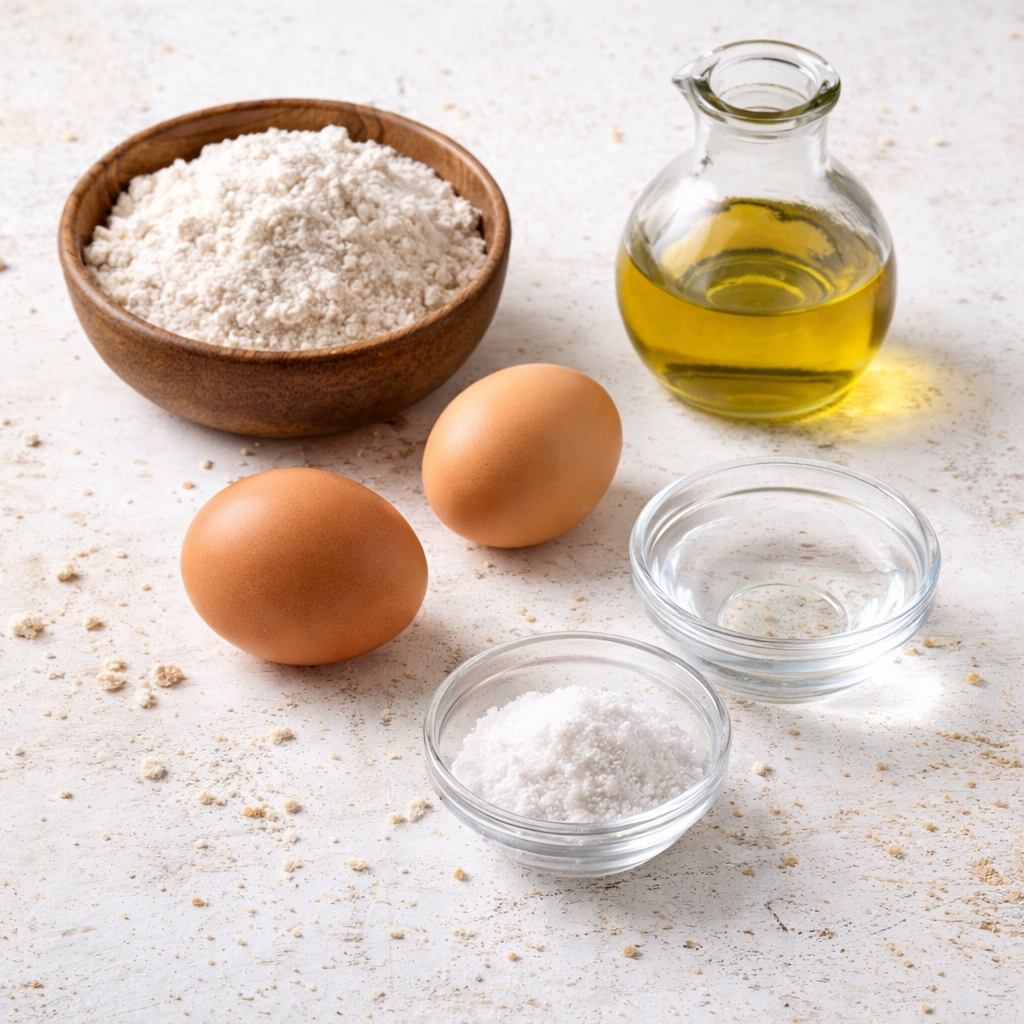
Ingredients
- 1 ½ cups gluten free flour blend
- 2 large eggs
- 1 tablespoon olive oil
- ½ teaspoon salt
- 1 to 2 tablespoons water (as needed)
Step-by-Step Instructions
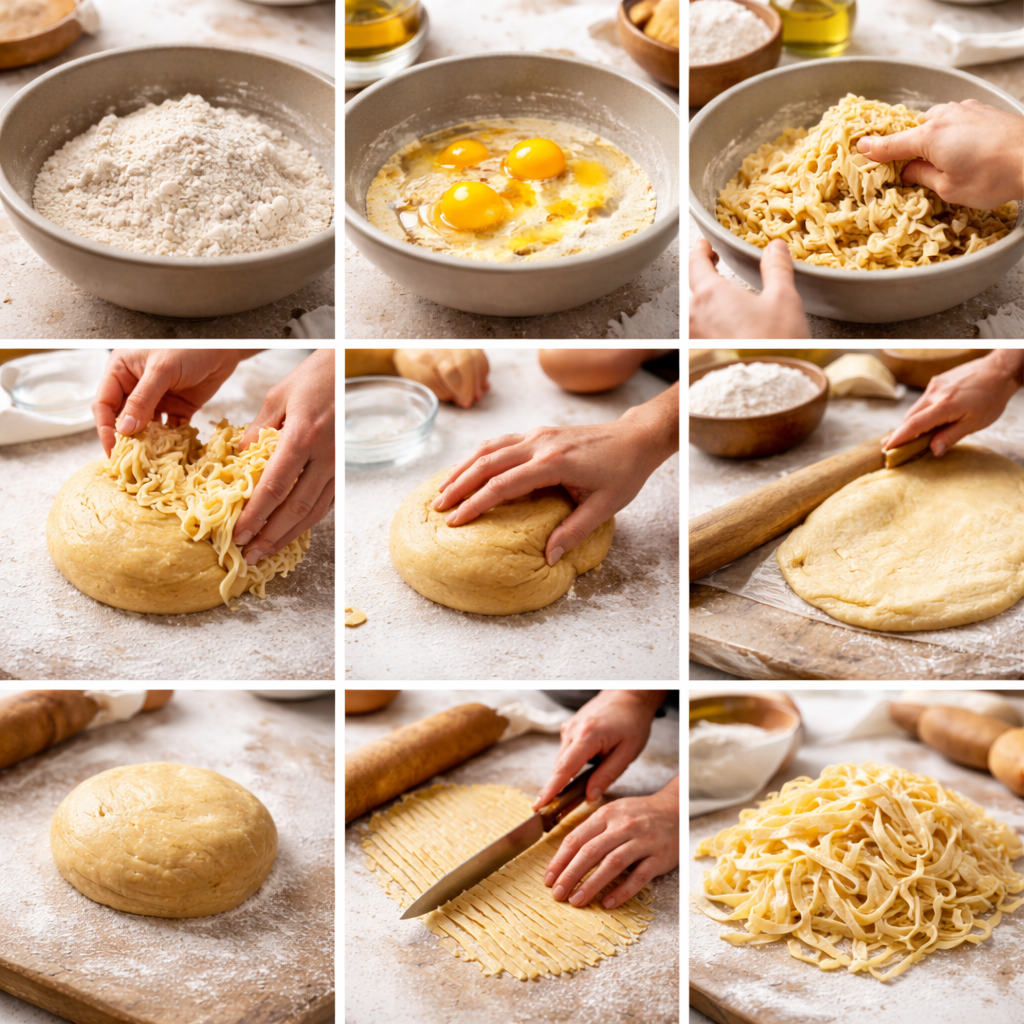
- In a bowl, combine gluten free flour blend and salt.
- Add eggs and olive oil.
- Mix until a dough forms. Adjust hydration with small amounts of water.
- Knead gently until smooth.
- Let the dough rest for 20 to 30 minutes (important for elasticity).
- Roll thin, about ⅛ inch thick.
- Cut into strips.
- Cook immediately or dry slightly before storing.
Pasta Machine vs Rolling Pin
A pasta machine creates consistent thickness and reduces tearing.
A rolling pin works perfectly for beginners but requires patience.
If your noodles keep breaking, rolling them thinner and resting the dough longer usually helps.
How to Cook Gluten Free Egg Noodles
Cooking gluten free noodles is different from wheat pasta.
- Use well-salted boiling water.
- Cook 2 to 4 minutes for fresh noodles.
- Do not overboil, they can turn gummy.
- Test for tenderness before draining.
If using gluten free egg noodles for soup, add them near the end to prevent overcooking.
Cooking Guide Based on Use
For Chicken Soup
Add noodles in the final 5 minutes.
For Beef Stroganoff
Cook separately and toss with sauce to maintain texture.
For Casseroles
Slightly undercook before baking.
Common Mistakes to Avoid
- Skipping resting time
- Using too much flour while rolling
- Overhydrating the dough
- Overcooking
If your gluten free noodles fall apart, you may need more binding agent like psyllium husk.
Can You Freeze or Dry Gluten Free Egg Noodles?
Yes.
Freezing
Place fresh noodles in an airtight container and freeze for up to 2 months.
Drying
Lay flat on a drying rack and air dry for 24 hours.
Reheating
Cook directly from frozen, no thawing needed.
Store Bought Gluten Free Egg Noodles (Buyer’s Guide)
If you prefer convenience, look for:
- Certified gluten free labeling
- Rice flour-based blends
- Minimal additives
Popular brands often available on Amazon or Instacart include:
- Jovial
- Manischewitz
- Gefen
Store bought gluten free egg noodles are great for quick meals, but homemade versions usually offer better texture.
Cost Comparison: Homemade vs Store Bought
Homemade:
- Lower cost per serving
- Customizable texture
Store Bought:
- Higher convenience
- Slightly more expensive
If you cook gluten free often, making your own gluten free pasta recipe may save money long term.
FAQs
Do egg noodles contain gluten?
Traditional ones do. Gluten free egg noodles use alternative flours.
Do gluten free egg noodles taste different?
Slightly. Texture may be softer but still satisfying.
Can you freeze gluten free egg noodles?
Yes, both fresh and cooked versions freeze well.
What is the best flour for gluten free pasta?
A blend of rice flour, tapioca starch, and potato starch works best.
How do you prevent gluten free noodles from breaking?
Rest the dough and use proper hydration.
Final Thoughts
Making homemade egg noodles may seem intimidating, but once you understand hydration, elasticity, and binding agents, it becomes simple.
Whether you choose to cook from scratch or buy store bought gluten free egg noodles, the key is proper cooking technique and label awareness.
If you’re ready to try it, start with the simple gluten free noodle recipe above, and adjust as needed based on texture preference.
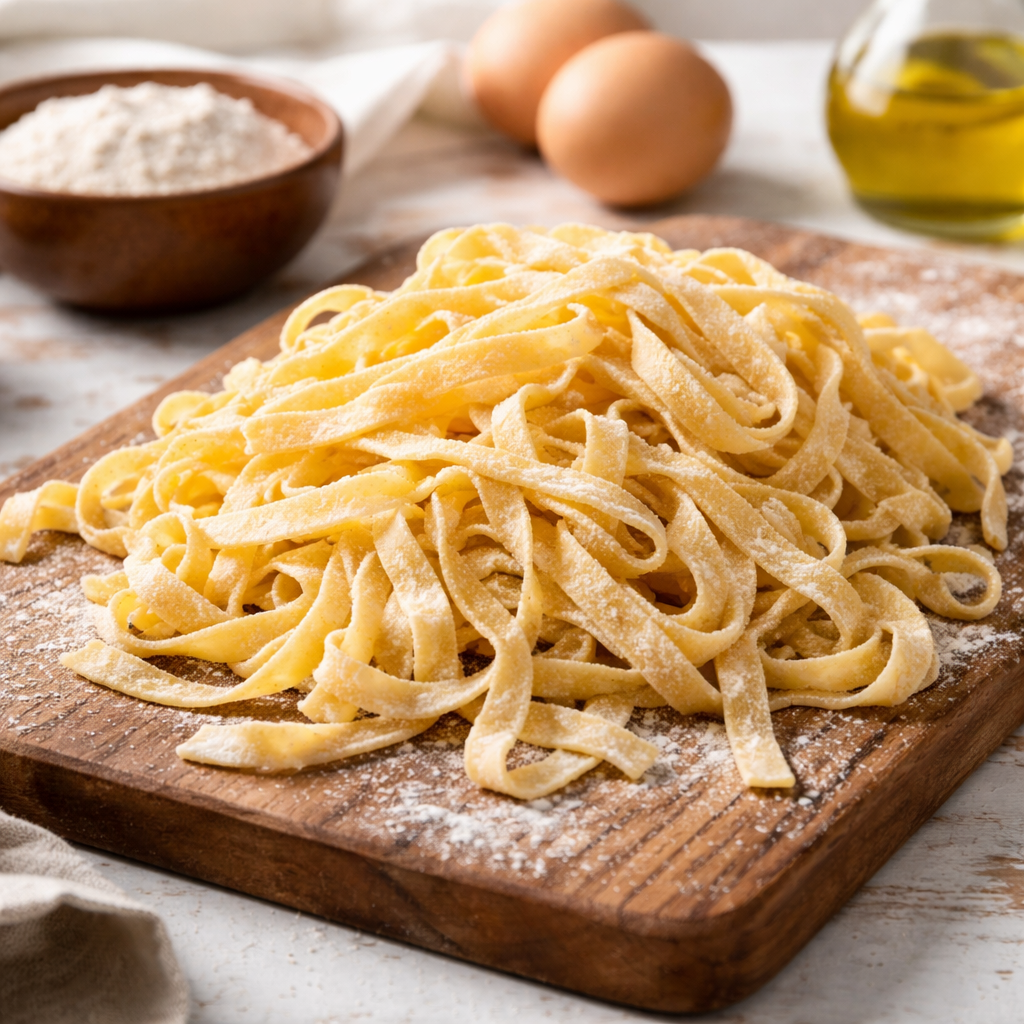
Gluten Free Egg Noodles
Ingredients
Equipment
Method
- In a large mixing bowl, combine gluten free flour blend and salt.
- Add the eggs and olive oil to the flour mixture.
- Mix until a dough begins to form. Add 1 to 2 tablespoons of water gradually if the dough feels too dry.
- Transfer the dough to a lightly floured surface. Knead gently for 3 to 5 minutes until smooth and cohesive.
- Cover the dough and let it rest for 20 to 30 minutes. This helps improve elasticity and prevents breaking.
- Using a rolling pin, roll the dough to about ⅛ inch thickness.
- Use a knife or pasta cutter to slice into noodle strips.
- Bring a large pot of salted water to a boil. Cook fresh gluten free egg noodles for 2 to 4 minutes until tender. Do not overcook.
- Drain immediately and serve with your favorite sauce or add to soup.
Nutrition
Notes
- If dough feels crumbly, add small amounts of water.
- If dough is sticky, lightly dust with flour.
- Resting the dough is essential for better texture.
- For soup, add noodles during the last 5 minutes of cooking.