
My abuela never called it French toast. She called it torrejas, and she made it look easy in a way I still cannot fully replicate. But after years of testing, and one Semana Santa morning when my toddler ate four pieces and my teenager asked for the recipe to send his girlfriend, I think I finally got close.
Jump to RecipeThis version uses thick telera or bolillo bread soaked in a spiced egg custard, fried golden in a generous pour of oil, then finished in a warm piloncillo and cinnamon syrup. It is rich, a little crispy on the outside, and completely soft in the middle. The syrup is what makes torrejas torrejas, not just fancy toast.
Why You’ll Love These Torrejas
- Ready in under 40 minutes: weeknight or holiday breakfast, it works
- Uses day-old bread: stale is actually better here, absorbs the custard without falling apart
- Piloncillo syrup is simple and stunning: three ingredients, big flavor
- Feeds a crowd: one loaf of bolillo makes 8 to 10 thick slices
- Kid-approved and adult-obsessed: my household is proof
Ingredients
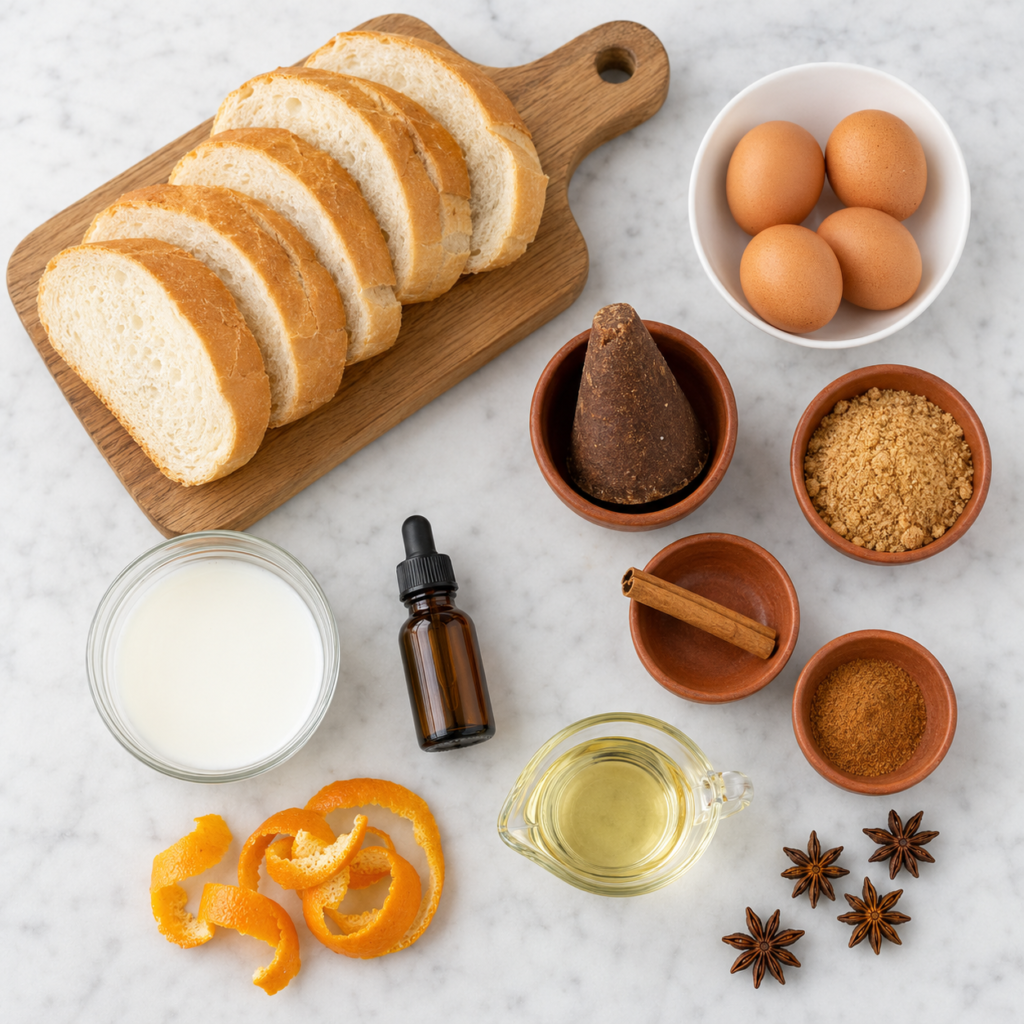
For the torrejas
- 8 slices day-old bolillo or telera bread, cut 1-inch thick, stale bread is not optional here, fresh bread turns to mush
- 4 large eggs
- ¾ cup whole milk, 2% works but the custard is noticeably less rich
- 1 teaspoon vanilla extract
- 1 teaspoon ground cinnamon
- Pinch of salt
- ½ cup vegetable oil for frying, you want enough oil to come halfway up the bread slice
For the piloncillo syrup
- 1 piloncillo cone (about 8 oz), roughly chopped, or 1 cup packed dark brown sugar as a substitute, though piloncillo has a deeper molasses note
- 2 cups water
- 2 cinnamon sticks
- 3 whole cloves
- 1 strip orange peel
- Optional: 1 star anise
How to Make Torrejas (Step by Step Guide)
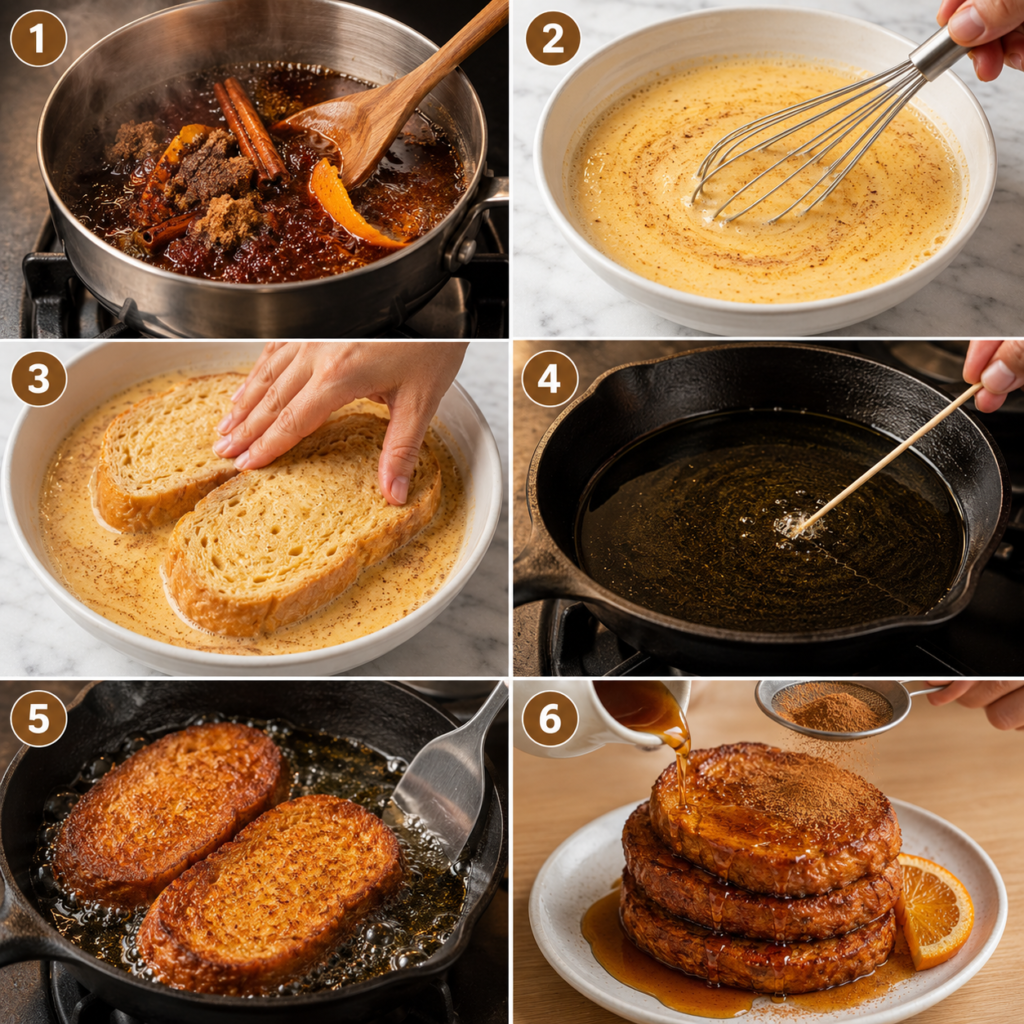
Step 1: Make the piloncillo syrup first
Combine the piloncillo (chopped into rough pieces so it melts faster), water, cinnamon sticks, cloves, orange peel, and star anise if using in a small saucepan over medium heat. Stir occasionally as the piloncillo dissolves, about 5 minutes. Once dissolved, reduce heat to low and simmer 10 to 12 minutes until the syrup thickens slightly and coats a spoon. Remove from heat. Fish out the spices and peel. The syrup will thicken more as it cools, so don’t panic if it seems thin, it usually is at this stage.
Step 2: Whisk the egg custard
In a wide shallow bowl, wide enough to lay a bread slice flat, whisk together the eggs, milk, vanilla, cinnamon, and pinch of salt until fully combined. You want a uniform, slightly frothy mixture. A shallow bowl matters here. I used to use a deep bowl and half the custard never actually reached the bread.
Step 3: Soak the bread slices
Lay each slice of bread in the custard and let it soak 30 to 45 seconds per side. Press gently to help the custard absorb. Day-old bread handles this well. Fresh bread at this point tends to fall apart when you try to flip it in the pan, trust me on the stale bread thing. Work in batches so the slices have room to soak properly.
Step 4: Heat the oil
Pour vegetable oil into a wide skillet, cast iron or a heavy stainless pan both work well, to a depth of about ¼ inch. Heat over medium to medium-high until a drop of custard or a wooden skewer tip sizzles immediately on contact. This is where most people go wrong with torrejas: too little oil or oil that is not hot enough means greasy, sad bread. Hot enough oil means a fast, crispy golden crust. You want that sizzle.
Step 5: Fry the torrejas
Work in batches, do not crowd the pan. Lay soaked bread slices gently into the hot oil. Fry 2 to 3 minutes per side until deeply golden brown. Resist the urge to flip early. If the bread is not releasing easily from the pan, it is not ready. Once both sides are golden, transfer to a paper towel-lined plate to drain for about 30 seconds.
Step 6: Plate and soak with syrup
Arrange the fried torrejas on a plate and pour the warm piloncillo syrup generously over the top. Dust with a little extra ground cinnamon. Serve immediately, torrejas that sit in syrup too long get very soft, which some people love and some people (my teenager) do not. If you want them to stay slightly crispy, serve the syrup warm on the side for dipping.
Amber’s Tips
💛 Amber’s Tip: Do not skip the piloncillo, I know brown sugar is easier to grab from the pantry, but piloncillo has a deep, slightly smoky molasses flavor that regular brown sugar genuinely cannot match. Also, make the syrup first and let it cool slightly while you fry. Pouring room-temperature syrup over hot torrejas gives you that perfect glossy soak without making everything instantly soggy.
Variations
Torrejas with Sweetened Condensed Milk
Skip the piloncillo syrup entirely and drizzle torrejas with a generous pour of sweetened condensed milk instead. Add a few sliced strawberries and a sprinkle of cinnamon on top. This version tends to be a bigger hit with younger kids, my toddler requests it by pointing aggressively at the fridge.
Savory Torrejas
Not all torrejas are sweet. In some regions, torrejas are made savory, soaked in a salted egg batter, fried, and served alongside beans and salsa. Skip the cinnamon and vanilla in the custard, add a pinch of cumin instead, and serve with warm salsa roja. It sounds odd. It is not.
Torrejas with Cheese
A popular Colombian-style variation adds a slice of fresh white cheese (queso fresco or queso de mano) melted or layered between two torrejas before soaking. The salty cheese against the sweet syrup is genuinely one of the better food combinations I have tried.
Slow Cooker Syrup Version
If you are making torrejas for a big group, think Easter brunch or Día de los Muertos, you can keep the fried torrejas warm in a slow cooker set to LOW, submerged in the piloncillo syrup. They get very soft and pudding-like, which is a whole different texture experience.
What to Serve with Torrejas
Café de olla: the natural pairing. Spiced Mexican coffee brewed with cinnamon and piloncillo mirrors all the same flavors and makes the whole breakfast feel intentional.
Fresh fruit: sliced mango, strawberries, or oranges cut the richness and add color to the plate.
Refried beans: sounds surprising alongside sweet torrejas but it is a classic combo in many Mexican households, especially for a Lenten Friday meal where meat is off the table.
Atole: a warm, thick corn-based drink flavored with cinnamon and vanilla that rounds out a full traditional Mexican breakfast beautifully.
Storage and Reheating
Leftover torrejas store in the fridge for up to 3 days in an airtight container. Keep the syrup separate if possible, torrejas stored already soaked in syrup get very soft overnight, which affects texture.
To reheat, I prefer a dry skillet over medium heat for 2 to 3 minutes per side. This brings back some of the crust. The microwave works in a pinch but you will lose all the crispy exterior, they turn steamy and soft.
The piloncillo syrup keeps in the fridge for up to two weeks in a sealed jar. Reheat gently on the stovetop or in 30-second bursts in the microwave before serving.
Torrejas do not freeze well, the texture gets spongy once thawed. Make only what you plan to eat.
Frequently Asked Questions
What kind of bread is best for torrejas?
Bolillo or telera bread, cut thick and left out overnight to stale, works best for torrejas. The slightly dried-out crumb absorbs the egg custard without disintegrating in the pan. In a pinch, thick-cut French bread or brioche loaf slices hold up well too, though the flavor is slightly different.
What is piloncillo and where do I find it?
Piloncillo is unrefined cane sugar sold in hard cone or disk shapes, it has a deeper, more complex molasses flavor than regular brown sugar. You can usually find it in the Latin foods aisle of most grocery stores, at Mexican markets, or online. Dark brown sugar is a workable substitute but the syrup will taste noticeably lighter.
Can I make torrejas ahead of time?
You can fry torrejas a few hours ahead and reheat them in a dry skillet before serving. The piloncillo syrup keeps well in the fridge for up to two weeks. I would not recommend soaking and holding them in syrup overnight, they get too soft and lose the texture contrast that makes torrejas worth making.
Are torrejas the same as French toast?
They are related but not the same. Torrejas use a spiced egg-and-milk custard, are shallow-fried in oil (not butter), and are finished in a piloncillo syrup infused with cinnamon, cloves, and orange. French toast is typically pan-sautéed in butter and served with maple syrup. The fried-in-oil method gives torrejas a crispier exterior and a distinctly different flavor profile.
Can I make torrejas without piloncillo?
Yes, dark brown sugar makes a reasonable substitute in the syrup. Use 1 cup packed dark brown sugar in place of one piloncillo cone, keep the cinnamon sticks, cloves, and orange peel, and follow the same simmering method. The syrup will be slightly less complex but still very good.
Tried This Recipe?
These torrejas have made it onto our Easter table, our random Tuesday breakfast table, and one very memorable late-night dessert situation after the kids were asleep. I hope they land just as well in your kitchen. If you make them, leave a star rating and tell me how your family reacted, I read every comment.
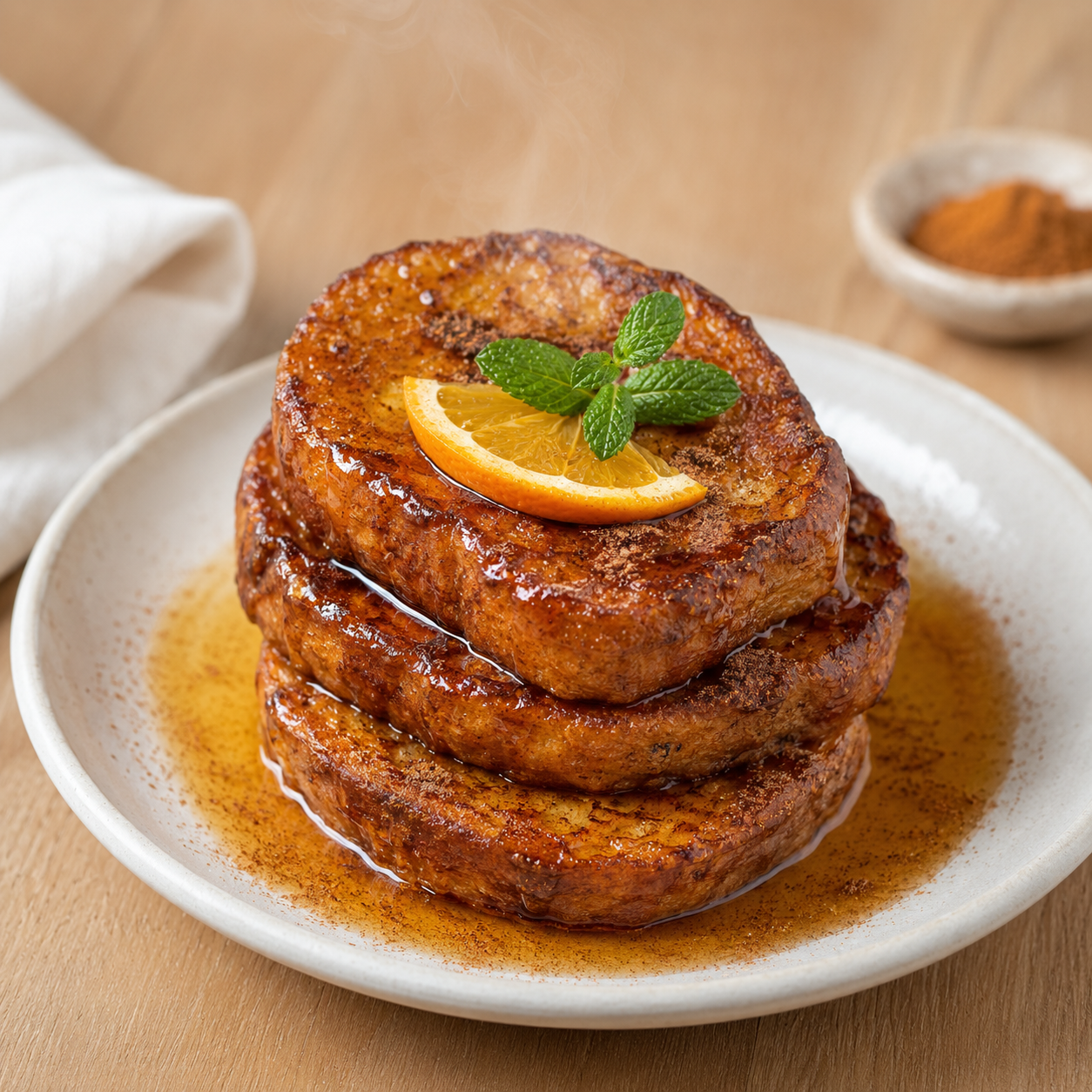
Torrejas With Piloncillo Syrup
Ingredients
Equipment
Method
- Combine piloncillo, water, cinnamon sticks, cloves, orange peel, and star anise in a small saucepan over medium heat. Stir until piloncillo dissolves, about 5 minutes. Reduce heat and simmer 10 to 12 minutes until slightly thickened. Remove spices and set aside.
- Whisk together eggs, milk, vanilla, cinnamon, and salt in a wide shallow bowl until fully combined and slightly frothy.
- Lay bread slices in the custard and soak 30 to 45 seconds per side, pressing gently. Work in batches.
- Heat vegetable oil in a wide cast iron skillet over medium-high heat until a drop of custard sizzles immediately on contact.
- Fry soaked bread slices in batches, 2 to 3 minutes per side, until deeply golden brown. Do not crowd the pan. Transfer to a paper towel-lined plate.
- Plate the fried torrejas and pour warm piloncillo syrup generously over the top. Dust with cinnamon and serve immediately.
Nutrition
Notes
Tried this recipe?
Let us know how it was!DISCLOSURE: This post contains affiliate links. If you purchase through these links, Mom Flavor Lab may earn a small commission at no extra cost to you. I only recommend products I genuinely use in my own kitchen.