
Caldo de res recipe is one of the most comforting dishes in Mexican cuisine. This traditional Mexican beef soup combines tender beef shank, rich homemade broth, and hearty vegetables into a meal that has been enjoyed for generations. Whether you’re looking for authentic Mexican comfort food, a nourishing family dinner, or a beef vegetable soup that tastes even better the next day, this recipe delivers.
Jump to RecipeUnlike ordinary beef soup, caldo de res relies on bone-in beef shank and slow simmering to create a flavorful broth filled with depth. The marrow bones help develop a rich stock while vegetables like corn on the cob, carrots, potatoes, zucchini, and cabbage add texture and natural sweetness.
If you’ve ever wondered how to make caldo de res at home, this traditional recipe walks you through every step so you can enjoy authentic Mexican beef soup in your own kitchen.
What Is Caldo de Res?
Caldo de res translates to “beef broth” or “beef soup” in Spanish. It is a traditional Mexican soup made with beef shank, marrow bones, vegetables, and aromatic seasonings.
What makes caldo de res special is the combination of tender beef and a slow-simmered broth. As the beef cooks, the marrow and connective tissue break down, creating a rich and hearty soup that feels both comforting and nourishing.
Many families have their own version of caldo mexicano, but most recipes include:
- Beef shank
- Corn on the cob
- Carrots
- Potatoes
- Cabbage
- Zucchini
- Onion
- Garlic
- Cilantro
- Lime wedges
The result is a complete meal served in a bowl.
Why You’ll Love This Recipe
- Rich homemade beef broth
- Authentic Mexican flavor
- Tender, fall-apart beef
- Loaded with vegetables
- Great for meal prep
- Freezer friendly
- Naturally high in protein
- Perfect for cold weather
Ingredients You’ll Need
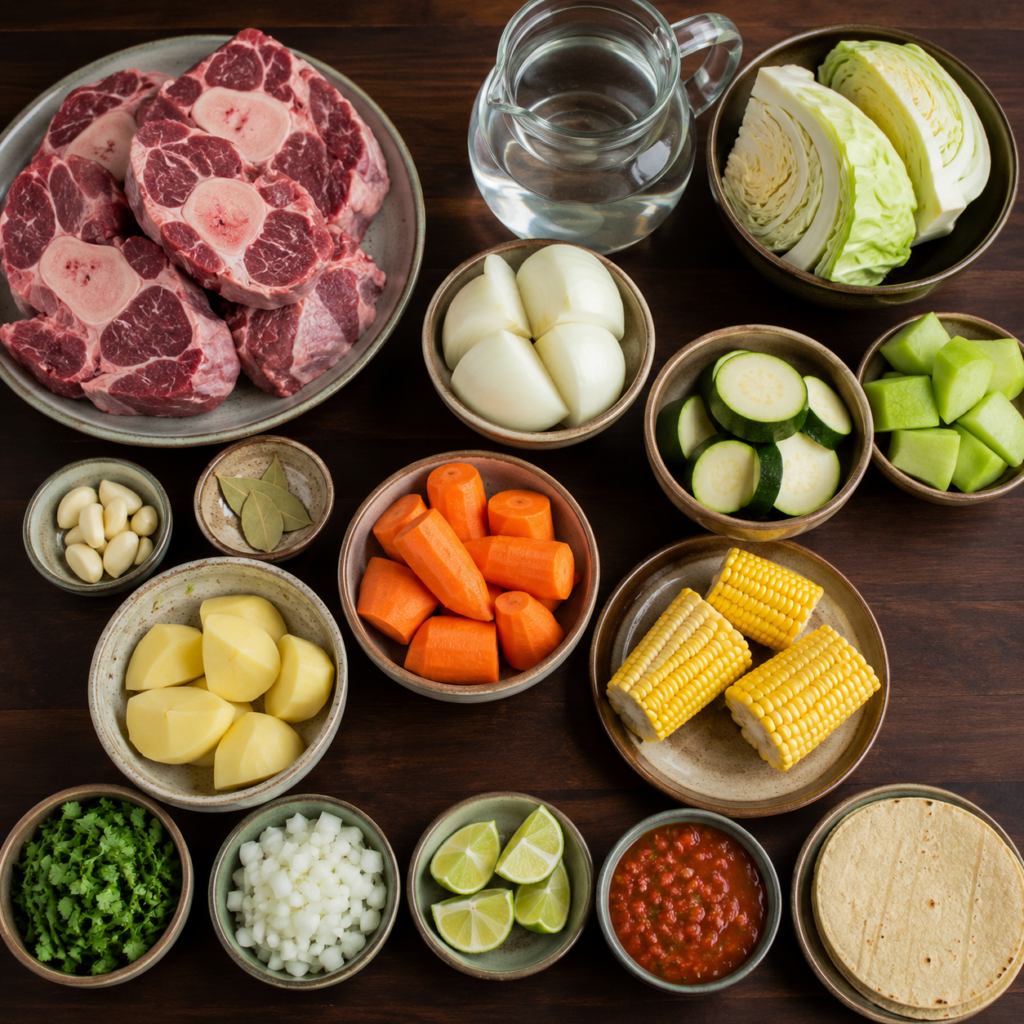
For the Beef and Broth
- 3 pounds beef shank with marrow bones
- 12 cups water
- 1 large onion, quartered
- 6 garlic cloves
- 2 bay leaves
- 1 tablespoon salt
- 1 teaspoon black pepper
For the Vegetables
- 4 carrots, cut into large pieces
- 3 potatoes, peeled and chunked
- 2 ears corn, cut into sections
- 1 zucchini, sliced thick
- ½ head cabbage, cut into wedges
- 1 chayote, chopped (optional)
Garnishes
- Fresh cilantro
- Chopped onion
- Lime wedges
- Salsa
- Warm corn tortillas
How To Make Caldo de Res
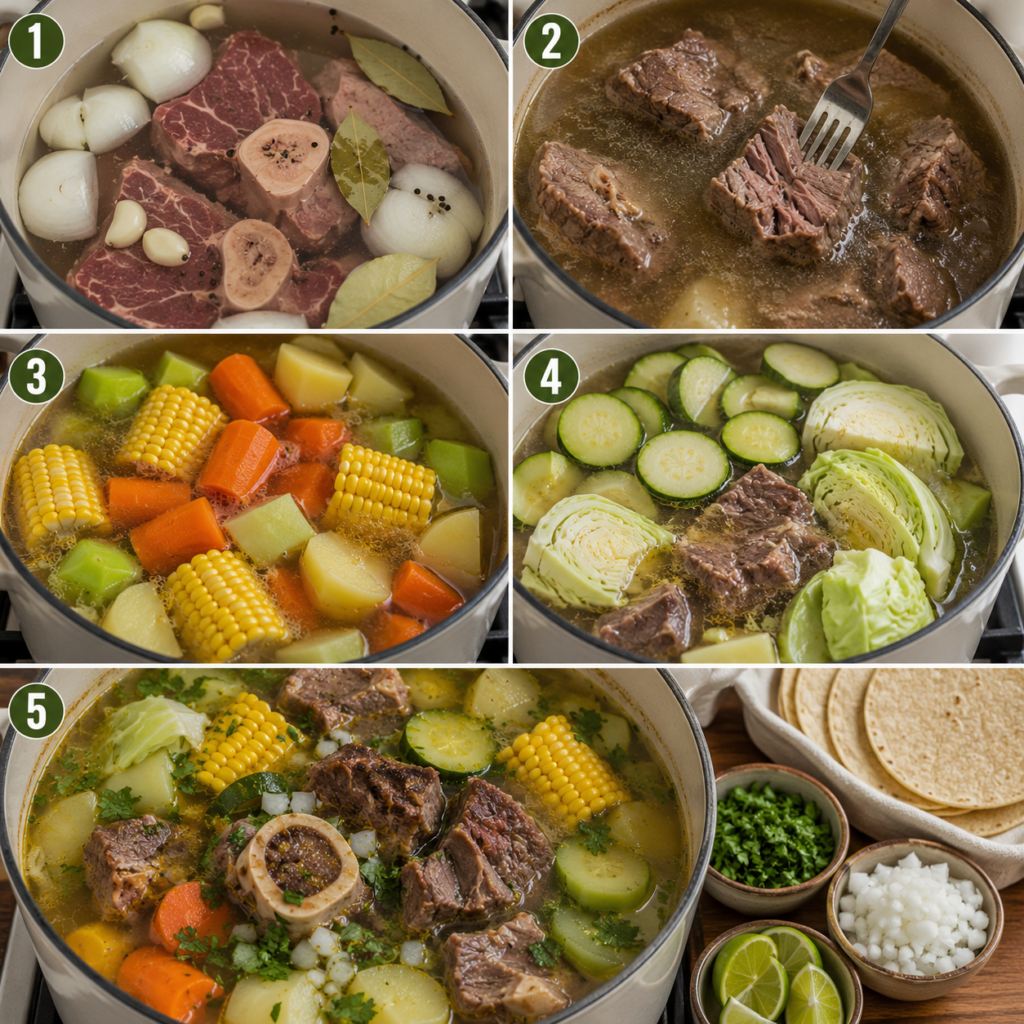
Step 1: Build the Broth
Place the beef shank, onion, garlic, bay leaves, salt, and pepper into a large stockpot.
Cover with water and bring to a gentle boil.
As the broth begins to cook, foam may rise to the surface. Skim this off with a spoon to help create a cleaner broth.
Reduce the heat to low and simmer for about 1½ hours.
Step 2: Simmer the Beef
Continue cooking until the beef becomes fork-tender.
This step is essential because slow simmering allows the marrow bones and connective tissue to enrich the broth naturally.
The beef should easily pull apart when tested with a fork.
Step 3: Add Root Vegetables
Add:
- Carrots
- Potatoes
- Corn on the cob
- Chayote
Continue simmering for 20 to 25 minutes.
These vegetables need more time to soften and absorb flavor from the beef broth.
Step 4: Add Quick-Cooking Vegetables
Add:
- Zucchini
- Cabbage
Cook another 10 to 15 minutes.
Adding them later prevents mushy vegetables and helps maintain texture.
Step 5: Finish and Serve
Taste the broth and adjust seasoning if needed.
Remove the bay leaves.
Serve the caldo de res hot with generous portions of beef, vegetables, and broth in each bowl.
Top with fresh cilantro, chopped onion, and lime wedges.
Serve alongside warm corn tortillas for a traditional Mexican meal.
How To Get a Richer Broth
One of the biggest differences between average beef soup and authentic caldo de res is the broth.
A few simple techniques make a huge difference.
Use Bone-In Beef Shank
Bone marrow adds richness and body to the broth.
Simmer Instead of Boil
A gentle simmer extracts flavor while keeping the broth clearer.
Give It Time
Many people rush the process. Slow cooking allows collagen and marrow to create a richer texture.
Skim the Surface
Removing foam helps improve both appearance and flavor.
Common Mistakes That Affect Flavor
Even a traditional caldo de res recipe can fall short if a few key details are overlooked.
Boiling Instead of Simmering
A hard boil can make the broth cloudy and cause the beef to become tough. Keep the soup at a gentle simmer for the best texture and flavor.
Using Lean Beef
Lean cuts simply do not produce the same rich broth. Beef shank, especially bone-in beef shank with marrow bones, is the best meat for caldo de res because it creates a flavorful homemade broth while becoming tender during cooking.
Adding All Vegetables at Once
Vegetables cook at different rates. Potatoes, carrots, and corn need more time than cabbage and zucchini. Adding everything together often results in mushy vegetables.
Underseasoning the Broth
The broth should be seasoned throughout the cooking process, not just at the end. Taste periodically and adjust salt as needed.
Traditional Variations Across Mexico
Like many traditional Mexican recipes, caldo de res varies from region to region and even from family to family.
Northern Mexico Style
Northern versions often use larger portions of beef and may include extra marrow bones for a richer broth.
Central Mexico Style
This version typically focuses on a balance of beef and vegetables while keeping the broth light and clear.
Spicy Caldo de Res
Some families add serrano peppers or green chiles to create a spicy caldo de res recipe with extra heat.
Vegetable Variations
While potatoes, carrots, corn, cabbage, and zucchini are common, some cooks also add:
- Chayote
- Green beans
- Celery
- Tomatoes
- Garbanzo beans
These additions create unique versions while maintaining the essence of authentic Mexican beef soup.
What To Serve With Caldo de Res
Although this hearty beef vegetable soup is filling on its own, a few simple sides make the meal even better.
Corn Tortillas
Warm tortillas are the traditional choice and are perfect for dipping into the broth.
Mexican Rice
A side of Mexican rice complements the rich beef broth beautifully.
Fresh Salsa
A spoonful of salsa can add brightness and a little heat.
Avocado
Sliced avocado provides a creamy contrast to the savory soup.
Lime Wedges
Fresh lime juice is one of the most important garnishes. A squeeze of lime enhances the broth and balances the richness of the beef.
Make-Ahead Tips
One of the best things about homemade caldo de res is that it can be prepared in advance.
Prepare the Broth Early
The broth can be made a day ahead and stored in the refrigerator.
Chop Vegetables Ahead of Time
Preparing vegetables in advance can save time on busy weeknights.
Store Separately
If you expect leftovers, storing vegetables and broth separately helps maintain the best texture.
Storage and Reheating
Refrigerator
Store leftover caldo de res in an airtight container for up to 4 days.
Freezer
This freezer-friendly Mexican soup can be frozen for up to 3 months.
For the best results, cool the soup completely before transferring it to containers.
Reheating
Warm the soup gently on the stovetop over medium heat until heated through.
Avoid rapid boiling, which can break down the vegetables.
Is Caldo de Res Healthy?
Many people wonder if this traditional Mexican soup is a healthy meal.
The answer is yes.
High in Protein
The beef provides a substantial amount of protein, making the soup satisfying and filling.
Packed With Vegetables
Carrots, cabbage, zucchini, potatoes, corn, and chayote contribute vitamins, minerals, and fiber.
Bone Broth Benefits
Because the broth is made with marrow bones and beef shank, it contains collagen and nutrients released during the slow cooking process.
Easily Adaptable
You can reduce sodium, increase vegetables, or use leaner cuts if desired while still enjoying a flavorful bowl of soup.
Frequently Asked Questions
What Does Caldo de Res Mean?
Caldo de res translates to “beef soup” or “beef broth” in Spanish. It is a traditional Mexican beef soup made with beef shank and vegetables.
What Is the Best Meat for Caldo de Res?
Beef shank is widely considered the best option because it contains bone, marrow, and connective tissue that help create a rich broth.
Can I Use Chuck Roast Instead of Beef Shank?
Yes. Chuck roast can be used if beef shank is unavailable, although the broth may not be quite as rich.
Can You Freeze Caldo de Res?
Absolutely. This soup freezes well for up to 3 months when stored in airtight containers.
Why Is My Broth Cloudy?
Cloudy broth is usually caused by boiling too aggressively. A gentle simmer helps create a clearer broth.
Can I Make Caldo de Res in a Slow Cooker?
Yes. Cook the beef until tender, then add vegetables according to their cooking times.
Can I Make It in an Instant Pot?
Yes. Pressure cooking significantly reduces the cooking time while still producing tender beef and flavorful broth.
What Vegetables Go in Caldo de Res?
Traditional vegetables include:
- Corn on the cob
- Potatoes
- Carrots
- Cabbage
- Zucchini
- Chayote
How Long Does Caldo de Res Last?
Stored properly in the refrigerator, it will remain fresh for about 4 days.
Final Thoughts
This authentic caldo de res recipe is everything a traditional Mexican beef soup should be, rich, comforting, hearty, and packed with flavor. The combination of tender beef shank, marrow-enriched broth, and colorful vegetables creates a meal that feels both nourishing and satisfying.
Whether you’re making it for a cozy family dinner, meal prep for the week, or a special weekend gathering, this homemade caldo de res delivers the kind of comfort food that never goes out of style.
Once you master this traditional Mexican soup, you’ll understand why generations of families continue to pass this recipe down and why it remains one of the most beloved dishes in Mexican cuisine.
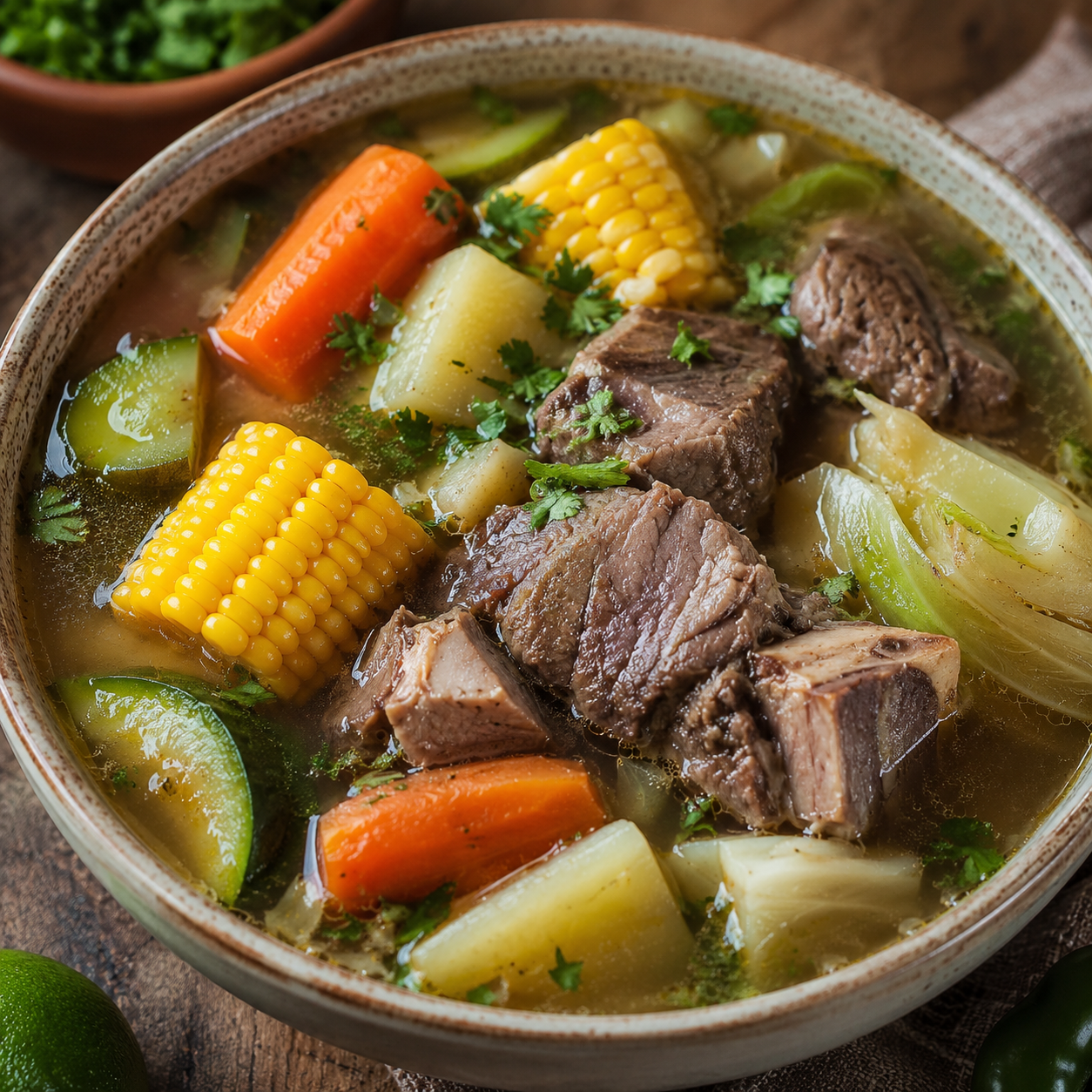
Caldo de Res Recipe
Ingredients
Equipment
Method
- Place the beef shank, onion, garlic, bay leaves, salt, and black pepper into a large stockpot.Pour in the water and bring everything to a gentle boil over medium-high heat.As foam rises to the surface, skim it off using a spoon or skimmer.Reduce heat to low and simmer uncovered for 1½ hours.
- Continue simmering until the beef becomes fork-tender and begins pulling apart easily.The marrow bones will naturally enrich the broth as it cooks.
- Add the carrots, potatoes, corn sections, and chayote.Simmer for 20 to 25 minutes until the vegetables begin to soften.
- Add the zucchini and cabbage.Continue cooking for 10 to 15 minutes or until all vegetables are tender but not mushy.
- Remove the bay leaves.Taste the broth and adjust salt if needed.Ladle the caldo de res into bowls, making sure each serving contains beef, vegetables, and broth.Top with cilantro and diced onion.Serve with lime wedges, salsa, and warm corn tortillas.
Nutrition
Notes
- Beef shank is the best cut for authentic caldo de res because it creates a rich broth.
- Chuck roast can be substituted if beef shank is unavailable.
- Avoid boiling aggressively to keep the broth clear.
- Add zucchini and cabbage near the end to prevent overcooking.
- Leftovers often taste even better the next day.