
If you’ve ever missed a bowl of homemade chicken noodle soup or a plate of creamy beef stroganoff after going gluten free, these gluten free egg noodles are about to become a staple in your kitchen.
Jump to RecipeUnlike many store-bought options, homemade gluten free egg noodles have a tender, chewy texture and rich flavor that makes comfort food feel complete again. The best part? You don’t need a pasta machine, specialty equipment, or hard-to-find ingredients. With a good gluten free flour blend, a few eggs, and a little patience, you can make fresh gluten free noodles from scratch right at home.
In this guide, I’ll show you how to make homemade gluten free egg noodles, compare the best gluten free flours, troubleshoot common problems, and share the best ways to store, freeze, and use them.
What Are Gluten Free Egg Noodles?
Gluten free egg noodles are a wheat-free version of traditional egg noodles made with a gluten free flour blend instead of regular all-purpose flour.
Traditional egg noodles contain wheat flour, which means they aren’t suitable for people with celiac disease, gluten intolerance, or those following a gluten free diet.
Homemade gluten free egg noodles offer the same comforting texture while eliminating gluten-containing ingredients.
How They Differ from Traditional Egg Noodles
Traditional noodles rely on gluten to create elasticity and structure.
Gluten free noodle dough uses carefully balanced flour blends and binders such as xanthan gum to create a dough that rolls out smoothly and cooks without falling apart.
The result is surprisingly close to classic homemade egg noodles.
Are Egg Noodles Gluten Free?
No. Traditional egg noodles are not gluten free because they are made with wheat flour.
However, homemade gluten free egg noodles use certified gluten free flour blends and are safe for individuals with celiac disease and gluten sensitivity when prepared properly.
Why Homemade Gluten Free Egg Noodles Taste Better
There are plenty of gluten free pasta products available, but homemade noodles offer several advantages.
Better Texture
Fresh gluten free noodles have a tender yet chewy texture that’s difficult to find in packaged products.
Ingredient Control
You control every ingredient that goes into the dough.
Budget Friendly
Making homemade noodles often costs less than buying premium gluten free pasta.
Perfect for Comfort Food
These noodles work beautifully in:
- Chicken noodle soup
- Beef stroganoff
- Buttered noodles
- Casseroles
- Creamy pasta dishes
Ingredients You’ll Need

- 2 cups gluten free flour blend
- 3 large eggs
- 1 teaspoon salt
- 2 to 4 tablespoons water as needed
Ingredient Breakdown
Gluten Free Flour Blend
A quality gluten free flour blend is the foundation of successful homemade pasta.
Eggs
Eggs provide structure, richness, and help bind the dough.
Salt
Enhances flavor and balances the dough.
Water
Used as needed to achieve the perfect dough consistency.
The Best Gluten Free Flours Compared
Not all gluten free flours perform equally when making homemade egg noodles.
| Flour Blend | Texture | Ease of Use |
|---|---|---|
| Cup4Cup | Soft and tender | Excellent |
| King Arthur Measure for Measure | Balanced texture | Excellent |
| Bob’s Red Mill 1:1 | Slightly firmer | Very Good |
| Better Batter | Chewy and rich | Excellent |
Which Flour Produces the Best Noodles?
For most home cooks, King Arthur Measure for Measure and Cup4Cup provide the most reliable results.
If your blend doesn’t already contain xanthan gum, you may need to add a small amount separately.
How to Make Gluten Free Egg Noodles
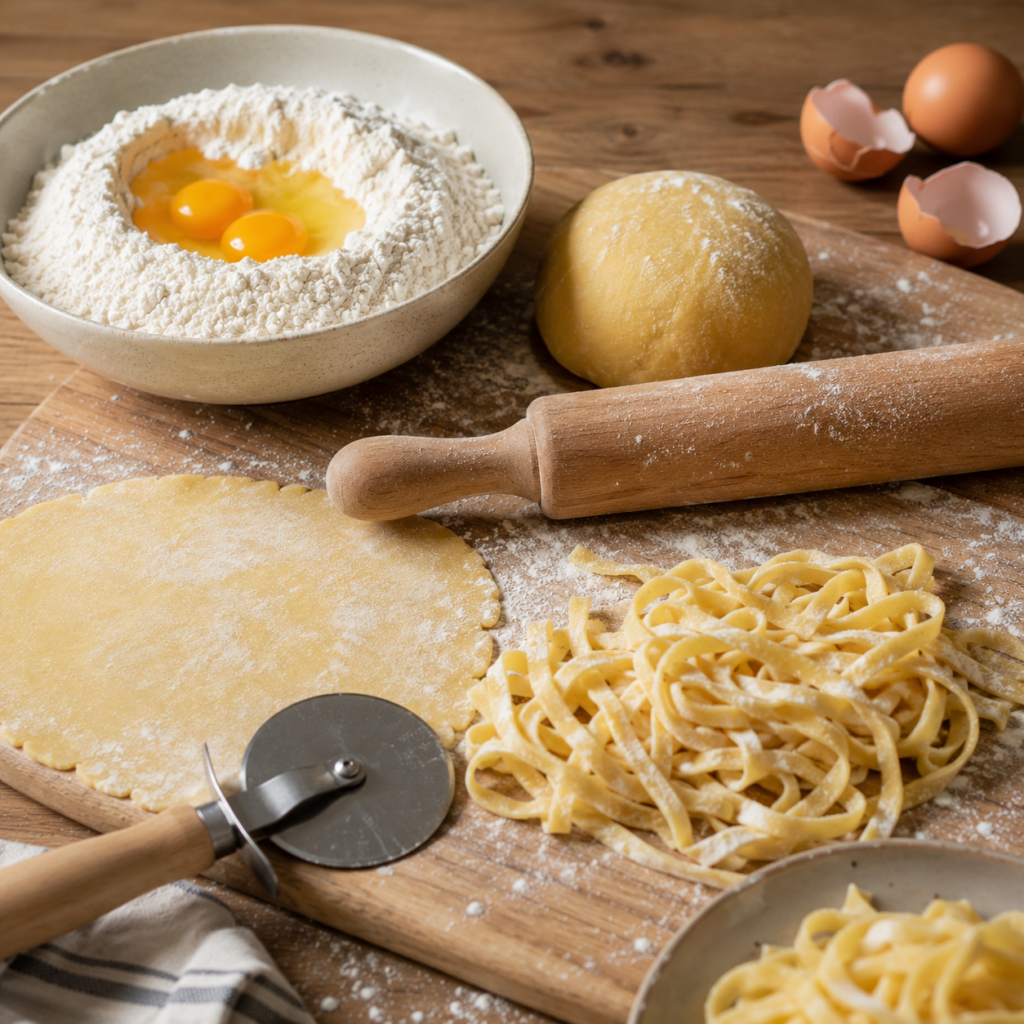
Step 1: Mix the Dough
Add the flour and salt to a large mixing bowl.
Create a well in the center and add the eggs.
Mix until a rough dough forms.
Step 2: Adjust Moisture
If the dough appears dry or crumbly, add water one tablespoon at a time.
The dough should feel slightly firm but pliable.
Step 3: Knead and Rest
Knead gently until smooth.
Cover and let the dough rest for 20 minutes.
This resting period allows the flour to hydrate fully.
Step 4: Roll the Dough
Roll the dough to approximately 1/8-inch thickness.
Avoid rolling too thin or the noodles may tear during cooking.
Step 5: Cut the Noodles
Use a pizza cutter or sharp knife to cut into strips.
The width can be adjusted depending on your intended use.
Step 6: Cook the Noodles
Bring salted water to a boil.
Cook for 3 to 5 minutes or until tender.
Fresh gluten free noodles cook much faster than dried pasta.
Dough Consistency Guide
One of the biggest challenges when making homemade gluten free pasta is achieving the correct dough consistency.
Perfect Dough Should Be
- Smooth
- Slightly firm
- Easy to roll
- Not sticky
- Not crumbly
Signs It Needs More Water
- Cracks around edges
- Dough breaks apart
- Dry appearance
Signs It Needs More Flour
- Sticky surface
- Difficult to roll
- Sticks to countertop
Troubleshooting Gluten Free Egg Noodles
Why Are My Noodles Falling Apart?
The dough may be too dry or lack sufficient binding ingredients.
Add additional moisture gradually.
Why Is My Dough Too Sticky?
Dust lightly with extra flour until manageable.
Why Did My Noodles Become Gummy?
Overcooking is the most common cause.
Fresh noodles cook quickly.
Why Are My Noodles Breaking?
They may have been rolled too thin.
Try a slightly thicker sheet of dough next time.
Best Ways to Use Homemade Egg Noodles
Chicken Noodle Soup
Fresh gluten free soup noodles are perfect for hearty homemade chicken noodle soup.
If you enjoy comforting soups, try pairing this recipe with your Pozole Verde or Instant Pot Tortilla Soup articles for additional meal inspiration.
Beef Stroganoff
The rich texture of homemade noodles pairs beautifully with creamy beef stroganoff.
Buttered Noodles
A simple combination of butter, parsley, and parmesan creates a quick side dish.
Casseroles
These noodles also work wonderfully in baked casseroles.
You may also enjoy serving them alongside Mexican Chicken Casserole or Chile Relleno Casserole.
How to Store, Freeze, and Reheat
Refrigerator Storage
Store uncooked noodles in an airtight container for up to 2 days.
Freezer Storage
Arrange noodles on a baking sheet and freeze until solid.
Transfer to freezer-safe bags for long-term storage.
Can You Cook Gluten Free Noodles from Frozen?
Yes.
Simply add frozen noodles directly to boiling water and increase cooking time slightly.
Make-Ahead Tips for Meal Prep
Homemade gluten free noodles are excellent for meal prep.
- Make a double batch.
- Freeze in portions.
- Label containers with dates.
- Use directly from frozen when needed.
This saves time during busy weeknights.
Homemade vs Store-Bought Gluten Free Egg Noodles
| Feature | Homemade | Store-Bought |
|---|---|---|
| Texture | Superior | Good |
| Flavor | Fresh | Moderate |
| Cost | Lower | Higher |
| Ingredients | Fully Controlled | Limited Control |
| Convenience | Moderate | High |
For most comfort food recipes, homemade noodles provide the best overall experience.
Nutrition and Dietary Considerations
These noodles are:
- Gluten free
- Wheat free
- Vegetarian
Suitable for:
- Celiac disease
- Gluten intolerance
- Gluten free lifestyle
Keep in mind they contain eggs and are not vegan.
Frequently Asked Questions
Can You Freeze Gluten Free Egg Noodles?
Yes. Freeze before cooking for the best texture.
Can You Make Them Without Xanthan Gum?
Yes, if your flour blend already contains a binder.
Do You Need a Pasta Machine?
No. A rolling pin works perfectly.
What Is the Best Flour for Homemade Egg Noodles?
King Arthur Measure for Measure and Cup4Cup are excellent choices.
Can You Use These Noodles in Soup?
Absolutely. They’re especially good in chicken noodle soup.
How Long Do Homemade Noodles Last?
Two days refrigerated or up to three months frozen.
Are Gluten Free Egg Noodles Suitable for Celiac Disease?
Yes, when prepared with certified gluten free ingredients.
Can You Make the Dough Ahead of Time?
Yes. Refrigerate the dough for up to 24 hours before rolling.
Final Thoughts
These homemade gluten free egg noodles prove that going gluten free doesn’t mean giving up classic comfort food. With just a handful of ingredients and a simple process, you can create fresh noodles that are perfect for soups, stroganoff, casseroles, and countless family meals.
Once you’ve made them from scratch, you’ll understand why so many home cooks prefer homemade gluten free noodles over store-bought alternatives. Keep a batch in your freezer, and you’ll always be ready for a cozy bowl of comfort food.

Gluten Free Egg Noodles
Ingredients
Equipment
Method
- In a large mixing bowl, whisk together the gluten free flour blend and salt until evenly combined.
- Create a well in the center of the flour mixture. Crack the eggs into the well and begin mixing with a fork until a rough dough starts to form.
- If the dough feels dry or crumbly, add water 1 tablespoon at a time. Mix after each addition until the dough comes together.
- Transfer the dough to a lightly floured surface and knead gently for 2 to 3 minutes until smooth. Avoid overworking the dough.
- Shape the dough into a ball and cover it with a clean kitchen towel or plastic wrap. Let it rest at room temperature for 20 minutes.
- Lightly dust your work surface with gluten free flour. Roll the dough into a rectangle about 1/8 inch thick.
- Using a pizza cutter or sharp knife, cut the dough into noodle strips approximately 1/4 inch wide. Adjust the width depending on your preferred noodle size.
- Fill a large pot with water and bring it to a rolling boil. Add a generous pinch of salt if desired.
- Carefully add the noodles to the boiling water. Cook for 3 to 5 minutes or until tender. Fresh homemade gluten free noodles cook much faster than dried pasta.
- Drain the noodles using a pasta strainer or slotted spoon. Serve immediately with your favorite sauce, soup, or casserole.
Nutrition
Notes
- Different gluten free flour blends absorb moisture differently. Add water gradually.
- If the dough becomes sticky, dust lightly with additional flour.
- For best results, use a gluten free flour blend that already contains xanthan gum.
- These noodles are excellent for chicken noodle soup, beef stroganoff, and creamy casseroles.
- Do not overcook, as gluten free noodles can become soft quickly.