
If you’ve ever looked at a Mexican restaurant menu and wondered, what is carnitas meat?, you’re not alone. Carnitas is one of the most popular fillings for tacos, burritos, tortas, and rice bowls, yet many people aren’t exactly sure what it is or how it’s different from other Mexican meat dishes.
Jump to RecipeIn simple terms, carnitas is a traditional Mexican pork dish made by slowly cooking pork until it’s incredibly tender and then crisping the edges for a rich, flavorful texture. The result is juicy shredded pork with crispy bits that make it a favorite throughout Mexico and beyond.
Whether you’re curious about the meat used for carnitas, how it’s made, or how it compares to pulled pork and barbacoa, this guide covers everything you need to know.
What Is Carnitas Meat?
Carnitas is a traditional Mexican pork dish that originated in the state of Michoacán. The word carnitas translates to “little meats” in Spanish, although the dish itself is typically made from larger cuts of pork that are slow-cooked until they become tender enough to shred.
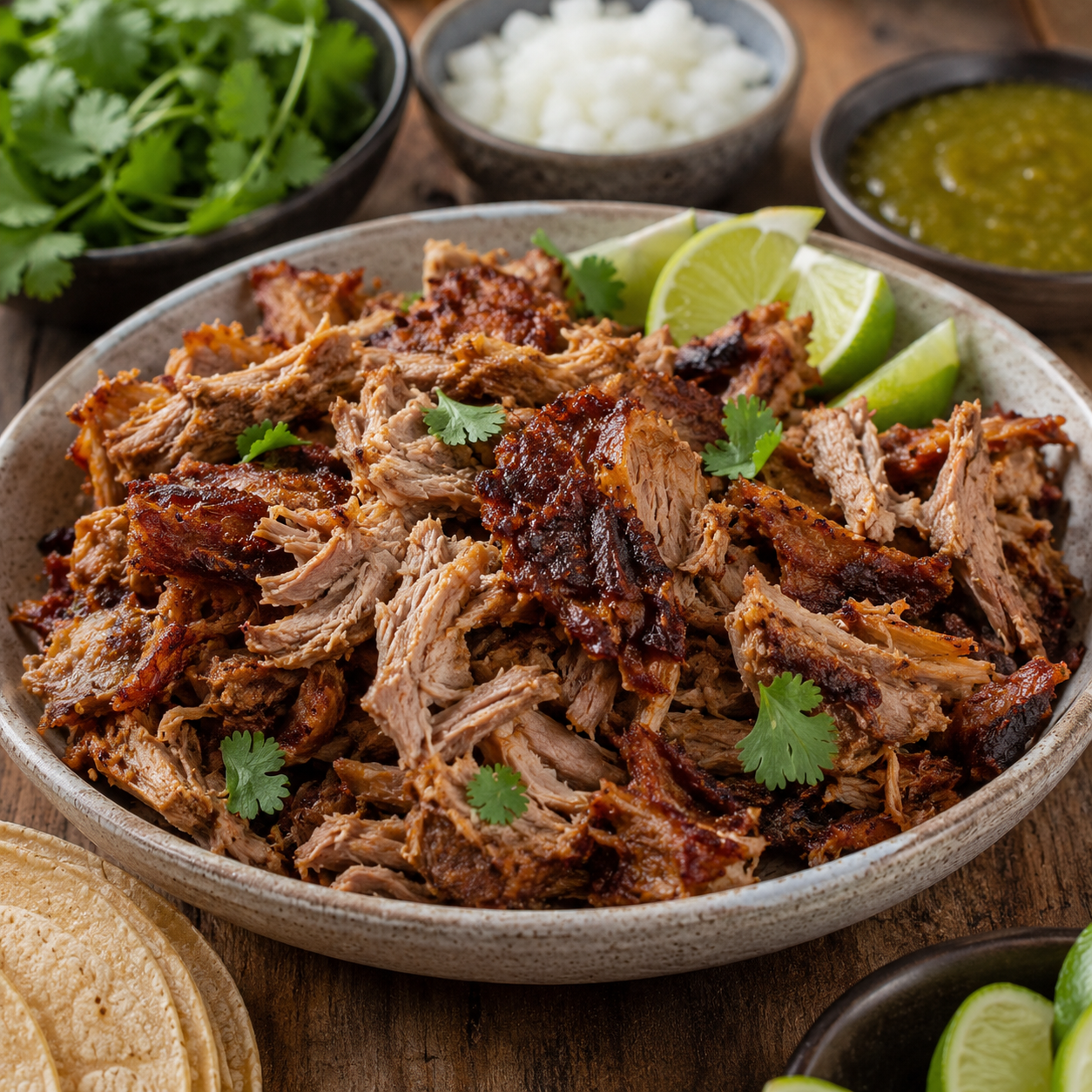
Authentic carnitas is known for its unique combination of textures. The inside remains moist and juicy, while the outside develops crispy, caramelized edges. This contrast is what makes carnitas stand out from many other shredded pork dishes.
Today, carnitas is commonly used in tacos, burritos, quesadillas, nachos, rice bowls, and tortas, making it one of the most recognizable dishes in Mexican cuisine.
Where Did Carnitas Originate?
Carnitas has deep roots in Michoacán, a region in western Mexico known for its rich culinary traditions. Historically, families would cook large portions of pork in copper pots over open fires during celebrations, festivals, and community gatherings.
The pork was slowly simmered in its own fat until it became incredibly tender. Over time, the cooking liquid reduced, allowing the meat to develop crispy edges while remaining juicy inside.
Although modern kitchens often use Dutch ovens, slow cookers, and pressure cookers, the traditional preparation method remains highly respected throughout Mexico.
Is Carnitas Pork or Beef?
One of the most common questions people ask is whether carnitas is made from pork or beef.
Traditional carnitas is made from pork. While some modern recipes experiment with chicken or beef, authentic carnitas uses pork because its fat content creates the signature texture and flavor associated with the dish.
If you’re ordering carnitas at a Mexican restaurant, you can almost always expect pork unless otherwise stated.
What Cut of Meat Is Used for Carnitas?
Several cuts of pork can be used, but some are more popular than others.
Pork Shoulder
Pork shoulder is the most common choice for carnitas. It contains enough fat and connective tissue to become tender during long cooking periods.
Pork Butt (Boston Butt)
Despite its name, pork butt comes from the upper shoulder of the pig. It’s well-marbled and produces exceptionally juicy carnitas.
Picnic Shoulder
Picnic shoulder is another affordable option that works well for slow cooking and shredding.
Why Fat Matters
The best meat for carnitas contains a good amount of fat. As the pork cooks, the fat renders and helps create the crispy, flavorful exterior that carnitas is famous for.
What Does Carnitas Taste Like?
Carnitas has a rich, savory flavor that highlights the natural taste of pork.
Unlike heavily seasoned barbecue dishes, carnitas relies on simple ingredients and slow cooking to develop flavor. Depending on the recipe, you may notice subtle notes of citrus, garlic, oregano, cumin, and bay leaves.
The texture is often what people remember most. Each bite offers tender shredded pork alongside crispy, caramelized edges.
Many people describe carnitas as:
- Juicy
- Savory
- Slightly smoky
- Rich but balanced
- Crispy on the outside
- Tender on the inside
This combination makes carnitas a versatile filling for tacos, burritos, and other Mexican dishes.
How Carnitas Is Traditionally Made
Traditional carnitas involves a slow-cooking process designed to maximize tenderness and flavor.
Slow Cooking
Large pieces of pork are cooked at low temperatures for several hours. This allows connective tissues to break down and creates a melt-in-your-mouth texture.
Cooking in Fat
Authentic recipes often cook the pork in rendered fat or lard. This method helps preserve moisture while developing deep flavor.
Crisping the Meat
Once the pork becomes tender, the cooking liquid reduces and the exterior begins to brown. This final stage creates the crispy bits that make carnitas unique.
Many modern recipes also use orange juice, lime juice, garlic, onions, and spices to enhance flavor during cooking.
Modern Ways to Make Carnitas
Today’s home cooks have several convenient options for preparing carnitas.
Dutch Oven Method
This method closely resembles traditional cooking and often produces excellent texture.
Slow Cooker Method
A slow cooker is one of the easiest ways to make carnitas. The pork cooks gently for several hours until it’s easy to shred.
Instant Pot Method
Pressure cooking significantly reduces cooking time while still producing tender meat.
Oven-Roasted Method
Some recipes finish the shredded pork under a broiler to create extra crispy edges.
Carnitas vs Pulled Pork
Although they may look similar, carnitas and pulled pork are different dishes.
| Carnitas | Pulled Pork |
|---|---|
| Mexican dish | American barbecue dish |
| Crispy edges | Usually soft throughout |
| Cooked in fat | Often smoked |
| Common in tacos | Common in sandwiches |
| Citrus and spices | BBQ rubs and sauces |
Pulled pork is typically seasoned with barbecue flavors, while carnitas focuses on the natural richness of pork and simple Mexican seasonings.
Carnitas vs Barbacoa
Another common comparison is carnitas versus barbacoa.
| Carnitas | Barbacoa |
|---|---|
| Usually pork | Usually beef |
| Crispy texture | Soft and juicy texture |
| Rich pork flavor | Deep beef flavor |
| Crispy edges | No crisping stage |
Both are popular taco fillings, but they offer very different eating experiences.
Carnitas vs Carne Asada
Carne asada is another Mexican favorite that differs significantly from carnitas.
| Carnitas | Carne Asada |
|---|---|
| Pork | Beef |
| Slow cooked | Grilled |
| Shredded | Sliced |
| Tender and crispy | Charred and smoky |
If you enjoy slow-cooked meats, carnitas may be your preference. If you prefer grilled beef, carne asada is often the better choice.
Why Carnitas Has Crispy Edges
The crispy exterior is one of the defining characteristics of carnitas.
As the pork cooks, moisture evaporates while fat renders. Toward the end of cooking, the meat begins to brown and caramelize. This creates the crispy bits that add texture and flavor to every bite.
Without this final crisping stage, carnitas would simply be shredded pork rather than authentic carnitas.
How Carnitas Is Served
Carnitas is incredibly versatile and can be used in many dishes.
Popular serving options include:
- Carnitas tacos
- Burritos
- Tortas
- Nachos
- Rice bowls
- Quesadillas
- Street tacos
Many people enjoy carnitas with fresh toppings that balance its richness.
Popular Toppings
- Chopped onion
- Fresh cilantro
- Salsa verde
- Pico de gallo
- Guacamole
- Lime wedges
- Pickled onions
Is Carnitas Healthy?
Carnitas can be part of a balanced diet when enjoyed in moderation.
Benefits include:
- High protein content
- Rich source of essential nutrients
- Satisfying and filling
However, because carnitas is made from fatty cuts of pork, it can also be higher in calories and fat compared to leaner protein options.
Pairing carnitas with vegetables, fresh salsa, and smaller portions can help create a balanced meal.
Is Carnitas Gluten-Free, Keto, or Low-Carb?
Gluten-Free
Carnitas itself is naturally gluten-free. Just be mindful of sauces and tortillas that may contain gluten.
Keto-Friendly
Carnitas is often considered keto-friendly because it’s high in protein and fat while being low in carbohydrates.
Low-Carb
Serving carnitas in lettuce wraps or bowls instead of tortillas makes it a great low-carb option.
Common Myths About Carnitas
It’s the Same as Pulled Pork
While similar in appearance, carnitas has a different cooking method and flavor profile.
It’s Always Spicy
Authentic carnitas is usually savory rather than spicy.
It Can Only Be Made One Way
Traditional methods are respected, but modern equipment like slow cookers and Instant Pots can also produce excellent results.
Frequently Asked Questions
Why is it called carnitas?
The name translates to “little meats” in Spanish.
What part of the pig is used for carnitas?
Most recipes use pork shoulder, pork butt, or picnic shoulder.
Can carnitas be made with beef?
Some variations exist, but authentic carnitas uses pork.
Is carnitas spicy?
Traditional carnitas is not usually spicy.
What does carnitas taste like?
It has a rich, savory flavor with tender meat and crispy edges.
Can you freeze carnitas?
Yes. Properly stored carnitas freezes well for several months.
What do you eat with carnitas?
Tacos, rice, beans, salsa, guacamole, and tortillas are popular choices.
How do restaurants make carnitas?
Many restaurants slow-cook pork for several hours before crisping it prior to serving.
Want to Make Carnitas at Home?
If you’re ready to try making authentic carnitas yourself, gather your ingredients and choose your preferred cooking method.
Whether served in tacos, burritos, or rice bowls, carnitas remains one of the most beloved dishes in Mexican cuisine. Its combination of tender shredded pork and crispy edges creates a flavor and texture that’s hard to resist.
Now that you know what carnitas meat is, you’ll have a much better idea of what to expect the next time you see it on a menu, or decide to make it at home.
Carnitas Recipe
Ingredients
Equipment
Method
- Pat the pork shoulder dry with paper towels.Season all sides with salt, black pepper, Mexican oregano, and cumin.
- Place the pork in a Dutch oven.Add onion, garlic, orange juice, lime juice, bay leaves, chicken broth, and lard.Mix gently to coat the pork.
- Cover and cook at 300°F (150°C) for 3½ to 4 hours.The pork should become fork-tender and easy to pull apart.Slow Cooker Option:Cook on LOW for 8 hours or HIGH for 5 to 6 hours.
- Remove the pork from the cooking liquid.Use two forks to shred the meat into bite-sized pieces.Discard bay leaves.
- Spread shredded pork on a baking sheet.Spoon ½ cup of the cooking liquid over the meat.Broil for 5 to 8 minutes until crispy golden edges develop.Watch carefully to prevent burning.
- Serve warm in tacos, burritos, quesadillas, rice bowls, or tortas.Top with diced onions, cilantro, salsa verde, and fresh lime juice.
Nutrition
Notes
- Pork shoulder provides the best balance of flavor and tenderness.
- Don’t skip the broiling step, it creates the signature crispy carnitas texture.
- Leftover carnitas can be refrigerated for up to 4 days.
- Freeze for up to 3 months in an airtight container.